Curriculum

Spark Their Imagination With Immersive Learning

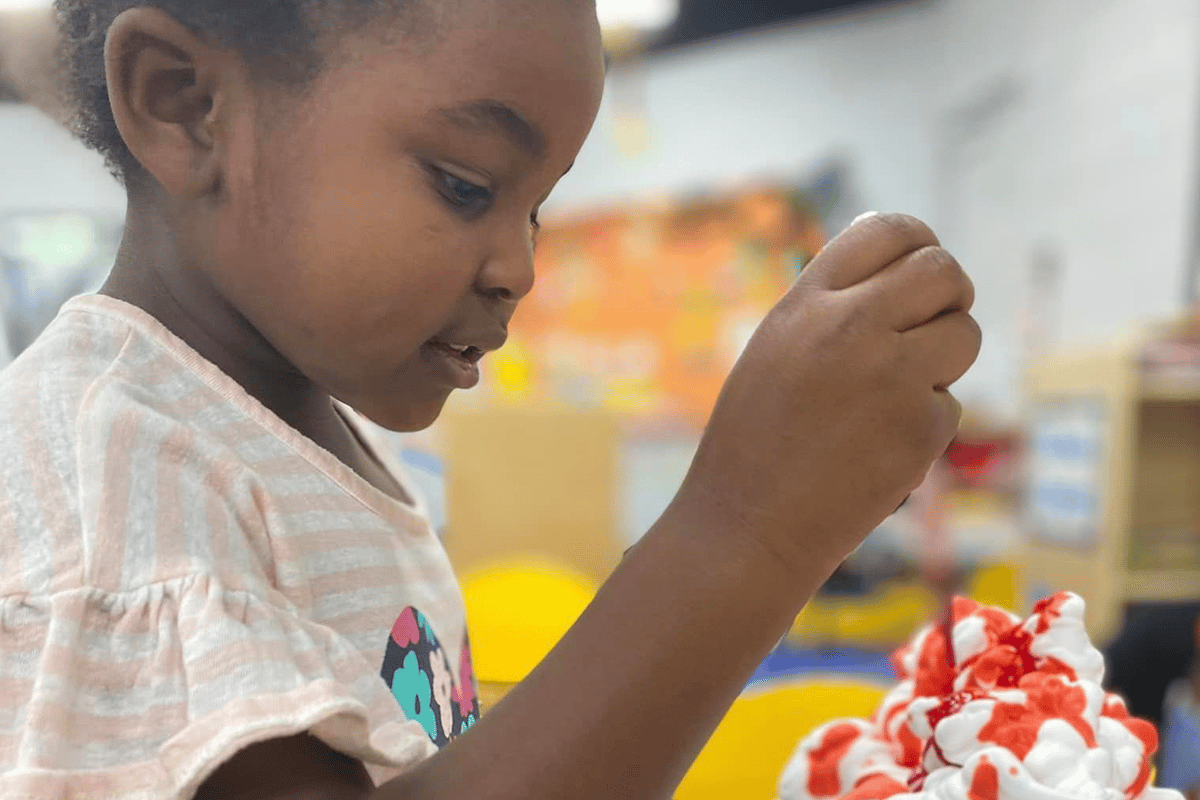
Studies show children learn best through play. Our play-based curriculum focuses on hands-on learning through immersive lesson plans, roleplay, and experiments your kiddo loves, giving them an early start in literacy, math, science, and social studies.
Spark Their Imagination With Immersive Learning
Weekly STEM Activities Inspire Fun & Creativity

Weekly STEM Activities Inspire Fun & Creativity

STEM (Science, Technology, Engineering, and Math) activities built into your child’s learning experience help create understanding, vocabulary, problem-solving, and critical thinking skills. STEM learning inspires fun, creativity, communication, collaboration, and reflection while preparing them with crucial technological skills for the future.

Onsite Speech & Behavior Therapists Offer 1-On-1
Services Throughout The Day For Children With Referrals

Social-Emotional Skills For Positive Relationships

The Conscious Discipline® approach, developed by Dr Becky Bailey, builds early social-emotional skills that lay the foundation for healthy relationships throughout life. Children learn how to express and manage their emotions, be understanding, open, and respectful to their teachers and peers, and use appropriate class and meal-time behaviors.
Social-Emotional Skills For Positive Relationships
Your Child Learns Best Through Play

Facilities Designed to Bring Learning To Life

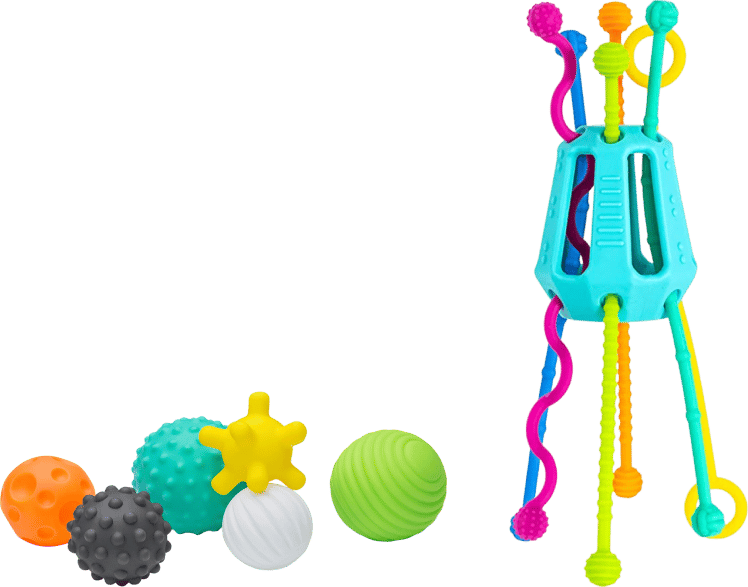
An environment designed to stimulate natural curiosity and discovery provides your child with proven, hands-on learning experiences through play. Your kiddo uses play-based activities to engage their senses, explore freely, communicate ideas, generate solutions, and interact with others.

Your Little One Takes Their Learning Outdoors
Every Day With Gardening & Physical Activity!

Language Classes Give Them A Dual-Language Advantage

Boost your child’s communication skills starting in infancy and toddlerhood with ASL (American Sign Language) and Spanish lessons starting as young as three. They build their vocabulary and confidence with an eventual goal of 50/50 English and Spanish instruction.

Language Classes Give Them A Dual-Language Advantage
All-Inclusive Enrichments Build Their Self-Esteem

All-Inclusive Enrichments Build Their Self-Esteem

Specialized classes like art, and language enhance your child’s skills and confidence while deepening friendships.

Consistent Daily Routines Support Social-Emotional
Growth By Providing Predictability & Stability

FAQs About Our Curriculum

Outdoor play is vital to early development and has several benefits. Moving, climbing, and playing outside build gross motor skills, coordination, spatial awareness, and confidence. Children can take safe risks, which builds problem-solving skills. Outdoor activities promote socialization with other children, which supports communication and empathy. Gardening outdoors fosters a connection to nature and encourages children to think about the world.
According to research by the US Department of Education, there are a number of benefits to being bilingual and biliterate, including improved executive function, problem-solving, and multitasking skills, better memory and cognitive flexibility, superior communication, empathy, cultural understanding, and confidence in social settings.
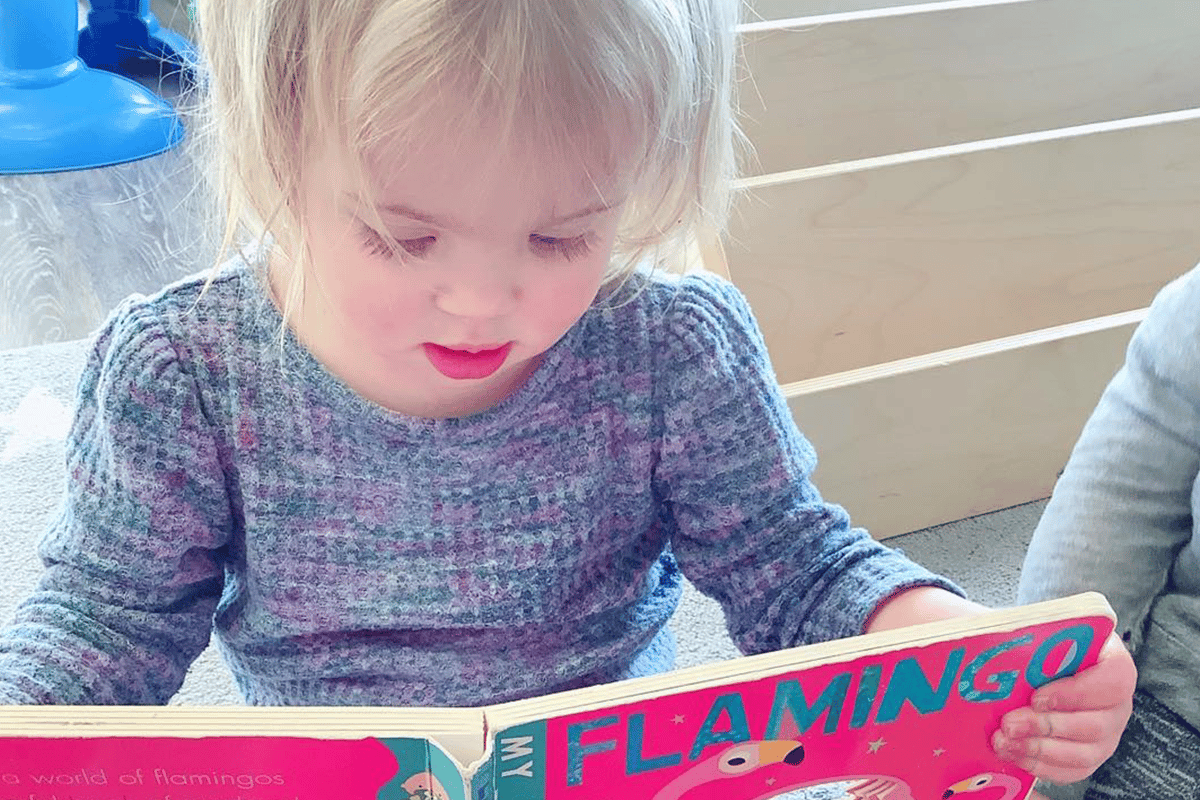
A literacy-based early education, which includes signing songs, access to age-appropriate books, storytelling activities, and a print-rich environment, supports cognitive and language development, memory, problem-solving, and vocabulary. Children who experience a literacy-focused education in their early years are better prepared for kindergarten and more successful academically, socially and emotionally.
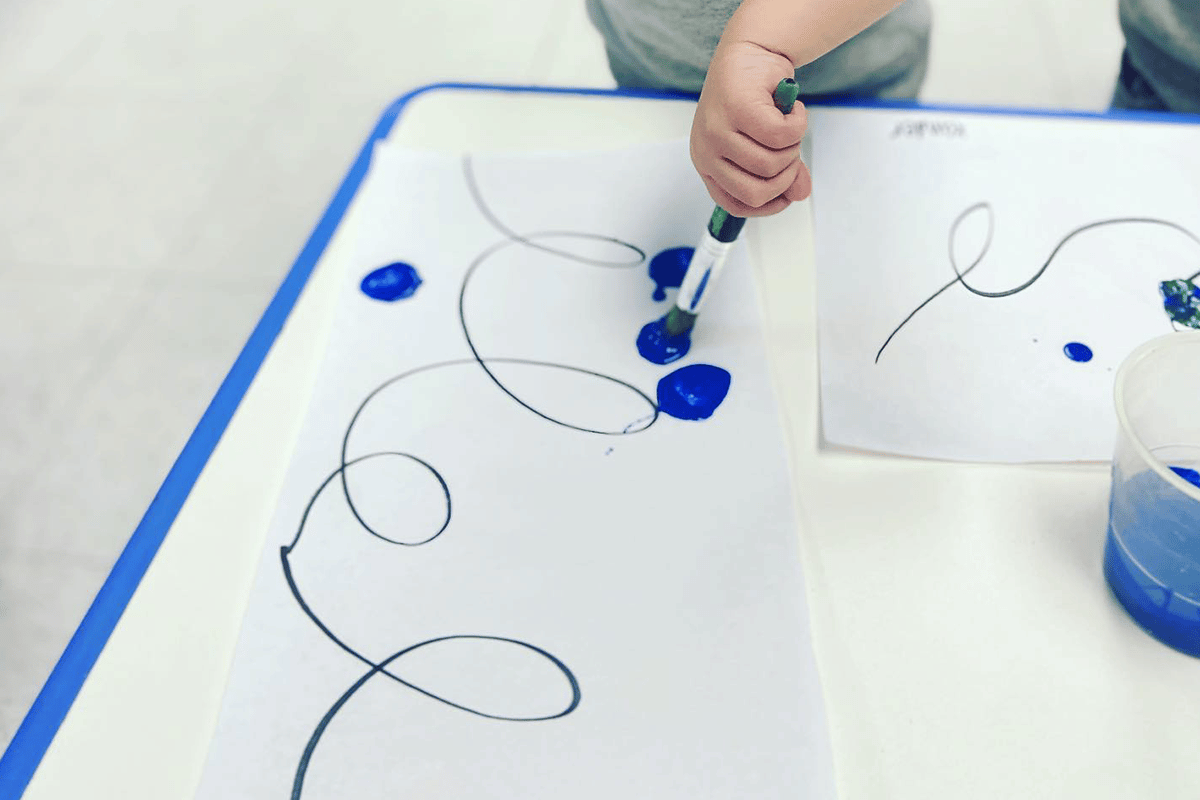
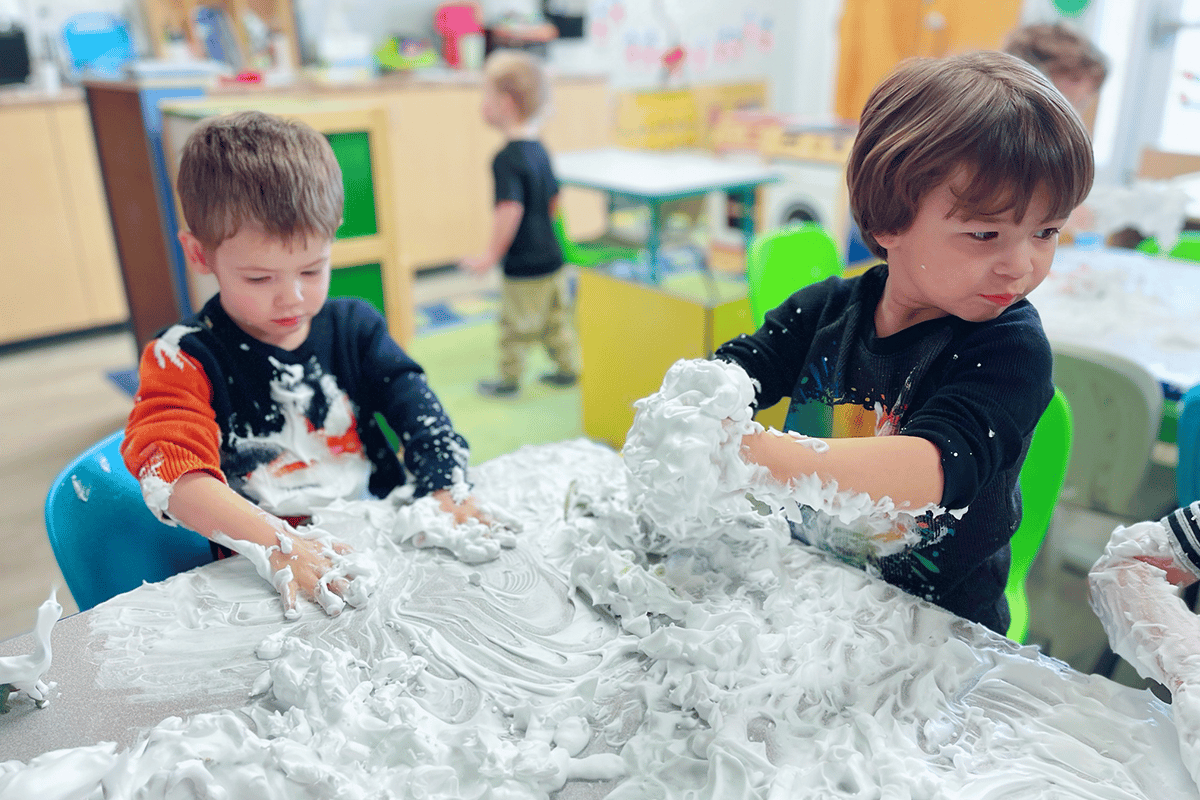
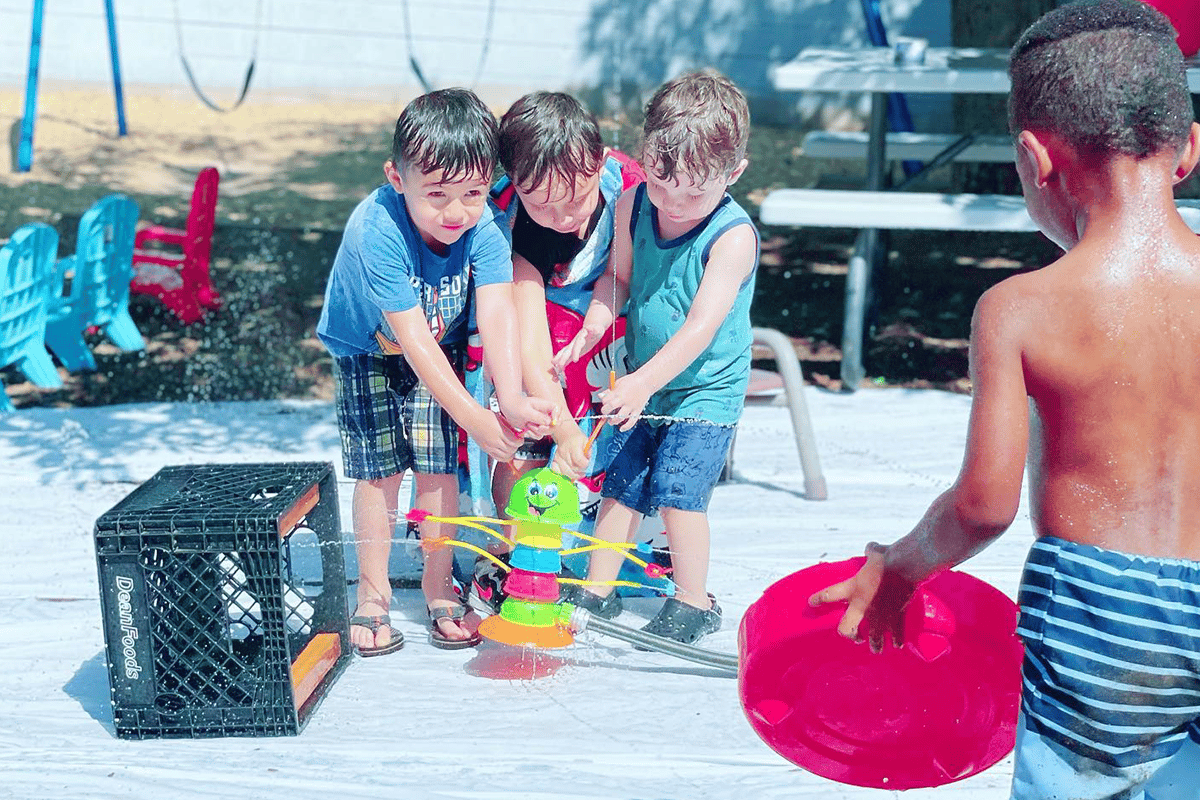
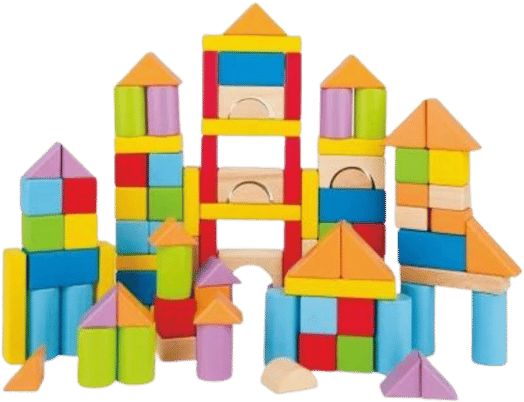
In play-based learning, play is the primary way that children learn. Playful games, toys, puzzles, and activities introduce new concepts for children to explore, solve, and build skills. Activities may be structured, open-ended, child-led, or teacher-directed, with a focus on fun and joy. Examples of play-based learning include building structures with blocks, painting, or creating crafts, acting out or making up stories, and engaging with sensory materials like sand and water.
Learning through play has great benefits for children, including improved cognitive skills like problem-solving, critical thinking, and logical reasoning; more advanced social skills like cooperation, communication, negotiation, compromise, and self-confidence; stronger fine motor skills (like handwriting) and gross motor skills (like running and jumping). Perhaps the greatest benefit of play-based learning is that the positive and engaging experience instills a lifelong love of discovery.

How Old Is Your Child?

Infants

6 weeks - 12 months

Toddlers

12 - 24 months

Twos

24 - 36 months

Early Pre-K

3 - 4 years​

Pre-K

4 - 5 years​

Summer Camp

5 - 12 Years

Our New Mexico NECPA National
Accreditation 5-Star Rating
Means You Get The Very Best Care!